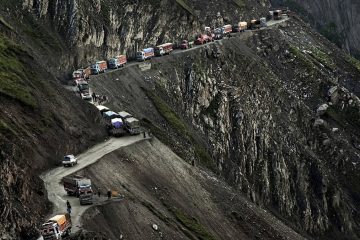
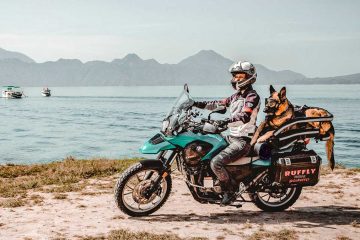
Happy to see you again and hope you’re ready to conquer the next motorcycle adventure on the world’s Karakoram Highway’s most dangerous roads. In our last guide we completed the Dalton Highway through Alaska’s harsh wilderness and the next in our list the Karakoram Highway (also known as the 8th wonder of the world. For any motorcycle rider no matter what experience you have, Karakoram highway will take you through the toughest conditions and have every weapon to you’re your life, from winding curves to landslides, Karakoram highway is notorious and takes hundreds of lives every year.
Known as the Eighth Wonder of the World, the Karakoram Highway is one of the planet’s highest and most treacherous roads. It is spread across the stunning landscapes of Pakistan and China and this legendary route goes through the heart of the mighty Himalayas, Karakoram, and Hindu Kush Mountain ranges.
Karakoram Highway is known for its sheer beauty, dizzying altitudes, and perilous conditions. Every thrill seeker and motorcycle enthusiast should raid this legendary road once in a lifetime to challenge themselves and check their toughness.
In this guide, we’ll help you reach the Karakoram highway from Dalton Highway to ride it on your motorcycle. This guide has everything from logistical tips on reaching the Karakoram Highway to tackling its unique dangers. So, get ready for a ride filled with breathtaking views, heart-pounding challenges, and a sense of achievement like no other.
Reaching the Karakoram Highway from the Dalton Highway on a Motorcycle
The Dalton Highway might be one of the most difficult roadways to drive, but it’s just one part of the grand saga that culminates at the Karakoram Highway (KKH). The travel from the Dalton Highway towards KKH is a crossing continent, dealing with logistics, and the preparation of your bike to undertake a whole new style of adventure.
Here is how you can go from the wild and remote trail of the Dalton Highway to one of the most beautiful and yet ravishing roads on the planet.
Shipping Your Motorcycle: A Key Transition
While the Dalton Highway gives you an idea of what it is like to ride in real Alaskan wilderness, traveling to the Karakoram Highway by motorcycle involves crossing international lines. The easiest way to do this is to ship your motorcycle as there is no direct way between Alaska and Pakistan or China. There are two ways to ship your motorcycle by sea or by air freight.
Air Freight
You can ship your motorcycle by air this is a quick way but is also expensive. The major international airports in Anchorage, Alaska, Seattle or Washington will facilitate the required shipping logistics.
Your motorcycle will normally be delivered to a port city in Pakistan or China—Karachi or Islamabad are typical arrival points in Pakistan and the Kashgar in China is the other main arrival place.
Sea Freight
Shipping by sea is a cheaper and slower alternative. Shipping from the U.S. West Coast (Seattle or Los Angeles, for example) to Karachi, Karimabad or Islamabad may take a few weeks.
Once the bike reaches its destination, you’ll need to clear customs, which can take a bit of time and effort, so plan for potential delays.
Flying to Pakistan or China
Once your bike is on its way, the next step is for you to make your way to Pakistan or China.
Islamabad in Pakistan is a common entry point for international travelers to the Karakoram Highway. From Islamabad, you can fly to the northern region of Gilgit or Skardu, which are the main starting points for KKH.
Kashgar, in Xinjiang, China is another common point in China to get entry in the Karakoram. However, through this, you have to go through some additional investigation of border crossing, logistics, and administrative paperwork.
Before booking your flight, be sure to check travel restrictions or visa requirements for both countries, as these may vary depending on the time of your journey.
Preparing Your Motorcycle for the KKH
Once your bike has arrived at its destination, it’s time to prepare for the next leg of the journey. The Karakoram Highway presents a vastly different set of problems to the Dalton Highway and your bike needs to be appropriately equipped for high altitudes, steep terrain, and extreme weather.
Key Preparations:
- Suspension: Make sure your bike’s suspension is in excellent condition. The KKH’s rocky and uneven roads will test your suspension like never before. A firm, high-grade suspension is necessary to prevent harsh shock and provide comfort during the ride.
- Tires: If you’re traveling through remote areas, ensure your tires can handle the high altitudes, dirt roads, and occasional wet patches. Make sure you have tires built for a variety of terrains, especially if you’re riding through mountain passes and unpaved areas.
- Fuel Capacity: Stations of gas on the KKH are scarce. Road sections, especially in the remote areas have no fuel stops for many miles. It is absolutely necessary to carry extra fuel canisters or a bigger fuel tank with you when riding on the Karakoram Highway.
- Tools and Repairs: Even with well-maintained equipment, breakdowns happen. Bring the necessary basic tools and spare parts, and a repair kit (also with a puncture repair kit) for occasional repair in the path.
- Clothing & Gear: Weather on the KKH can fluctuate drastically. Do not forget to bring layers including cold weather gear as temperatures will be very variable at high altitudes. Waterproof clothing is also necessary, as rainfall or snowfall can be difficult to predict in the higher mountain ranges.
The Border Crossing: Navigating Customs and Paperwork
The crossing border from Pakistan to China (or vice versa) can be particularly challenging, particularly as part of the crossing of the highest point of the Karakoram Highway, the Khunjerab Pass.
- Pakistan to China Border: Riders wishing to travel from Pakistan to China have to cross the Khunjerab Pass located at more than 4,700 meters (15,400 feet). You have to be prepared for a rigorous border crossing process. You will have to deal with both vehicle and passenger customs checks and the documents for the motorbike’s entry into China.
- Visa and Permits: Make sure to try to secure the right visa and permits before you travel. Both countries have different visa requirements, and cumbersome paperwork for the bike, e.g., in China, can be a major delay.
- Customs Checkpoints: The customs procedures can take a while, especially if you are unfamiliar with the region. Be patient and ensure all documents, including bike registration and insurance, are in order.
Entering Pakistan’s Northern Areas: Islamabad to Gilgit and Beyond

Once your motorcycle is ready and you’ve cleared customs, it’s time to hit the road. From Islamabad, you’ll need to take a local flight to Gilgit (about 1.5 hours), which is the closest major city to the Karakoram Highway’s northern start.
Also, one can take a long drive on the road from Islamabad to Karimabad in the Hunza Valley. Expect some rough, hilly roads, and it’s a scenic way into the KKH.
By this point, your bike has been ready and your passport stamped. You’re ready for the incredible journey ahead.
The Karakoram Highway: The Eighth Wonder of the World
The Karakoram Highway (KKH) is more than just a highway, it is a trip back in time, to nature, to what humanity has been able to achieve with engineering. Renowned as the Eighth Wonder of the World, Karakoram Highway has become one of the most desired destinations, not only for explorers and adrenaline junkies but for motorcycle enthusiasts as well. Stretching for over 1,300 km (800 mi), the Karakoram Highway links Pakistan and China and passes through the world’s highest and remotest mountain ranges on earth.
Before we start out journey to conquer the Karakoram Highway, let’s first know what makes the Karakoram Highway so special, from its history and construction to the challenges it presents and the unique experience it offers.
The History of the Karakoram Highway
The Karakoram Highway has a fascinating and complex history, which is intricately linked to the geopolitical and cultural history of the area.
- A Silk Road Legacy: The Karakoram Highway has its genesis in the historic Silk Road, a system of trade routes used to link China, Central Asia, the Middle East, and Europe. Like that of a rough road, merchants have for centuries used this landscape to import and export silks, spices and jewels.
- Modern Construction: The Karakoram Highway was constructed in the 1960s and 1970s, during a time when Pakistan and China were looking to bolster their trade relations. This was followed by a major bilateral cooperation between the two countries to build a road linking Gilgit-Baltistan to the Xinjiang province in China.
- Labor Force: Thousands of workers, including local laborers and engineers from Pakistan and China, were involved in building the highway. The work was laborious and many laborers losses their lives during this highway’s construction.
- Strategic Importance: Nowadays, the Karakoram Highway plays an important role not only for business but also for travelers traveling between Pakistan and China. It’s a vital connection between the two countries, especially considering the remote and mountainous regions it traverses.
Route and Geography of the Karakoram Highway
The Karakoram Highway runs the length of a visually spectacular array of scenes, each revealing aspects of the area’s natural splendor.
Starting Point: Islamabad, Pakistan
The highway begins in the bustling capital city of Islamabad in Pakistan, a modern city that serves as the gateway to the mountains. From here, the road heads toward Murree and the Naran Valley, offering glimpses of green valleys before plunging into the higher altitudes of the Karakoram.
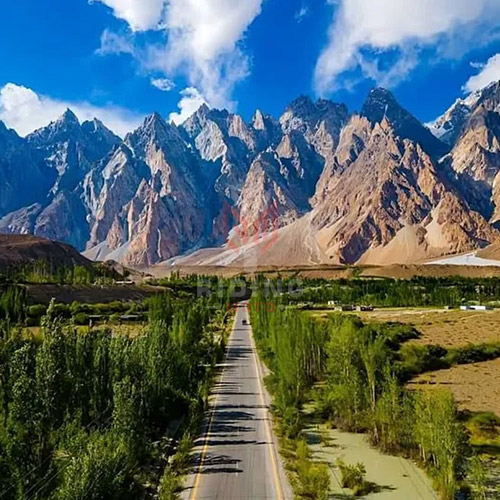
2. Gilgit-Baltistan
Once up you go, you will be in Gilgit-Baltistan, which is a region famed for its beautiful valleys and impressive ranges of mountains. The road traverses rocky mountain passes with stunning lookouts over the Nanga Parbat—the ninth most elevated mountain in the world— and the rugged terrain of the Hindu Kush and Himalayas.
3. Hunza Valley
Among the scariest places on the Karakoram Highway is the Hunza Valley, a remote landscape of peace and beauty characterized by green landscapes, terraced land, and snow-covered peaks. It’s a great place to park and enjoy the scenery.
4. Khunjerab Pass: The Highest Point
The highest point of the Karakoram Highway is Khunjerab Pass, sitting at an altitude of 4,700 meters (15,400 feet). This is a point of no return for many travelers—once you pass this, you enter China.
5. Xinjiang, China
The Karakoram Highway terminates at Kashgar, an ancient city located in Xinjiang province of China. Kashgar is one of the oldest cities in Central Asia, once a key trading hub along the Silk Road.
The Road Condition: A Mixed Bag
The Karakoram Highway itself is a spectacular panorama and a memorable drive, although it is a roadway that is often quite demanding, particularly for motorcyclists.
- Unpaved Sections: Not all of the KKH is paved. Some sections of the road especially in the remote areas are still unsealed, and these parts tend to be more bumpy and hazardous in the ride. The motorcycle riders must be equipped with knowledge of gravel, loose stones, and dirt roads that require expertise and attention.
- Narrow and Winding Roads: In many areas especially in the mountain areas, the Karakoram Highway is narrow. In many places, the roads are only wide enough to allow one vehicle at a time, drivers and motorcyclists must be alert to other vehicles, particularly lorries and coaches.
- Steep Climbs and Descents: The road goes up to quite extreme high altitudes and down into deep valleys. This presents both breathtaking views and hair-raising drops. For motorcyclists, control of their bikes is vital, particularly when riding switchbacks and steep ascends.
The Challenges and Dangers
As is the case with the Dalton Highway, the Karakoram Highway is not for the faint of mind. Here are some of the biggest challenges you’ll face when conquering the Karakoram Highway:
- Altitude Sickness: If individuals go to areas where the air is thinner, at high altitudes, it can result in altitude sickness. Symptoms include headaches, nausea, dizziness, and shortness of breath.
- Extreme Weather: The weather on the Karakoram Highway can be incredibly volatile. It is possible to have temperatures go below freezing, and snow even in the summer. Roadways can become slippery and hazardous due to rain, hail, and thunderstorms, especially in unpaved sections.
- Remote Areas: Some places on Karakoram Highway are completely remote without any service for miles. Fuel stations, repair shops, and emergencies are few and far between, so you’ve to be 100% self-sufficient with extra fuel, tools, and provisions.
- Landslides and Rockfalls: Due to the mountainous terrain, landslides and rockfalls are common occurrences along the highway. Make sure to be prepared for unforeseen road closures and detours, and use extra caution while riding in regions subject to these natural hazards.
Planning Your Ride on the Karakoram Highway: Essential Tips
The planning of motorcycle travel along Karakoram Highway (KKH) is also a painstaking process because of the difficulties of terrain, altitude, and remoteness along the route. A smooth ride involves more than just getting your motorcycle ready—it’s about equipping yourself with the right knowledge, gear, and mental preparation to face the unpredictable conditions of one of the world’s most famous and dangerous roads.
Best Time to Ride the Karakoram Highway
Selecting the appropriate time to travel on the Karakoram Highway is of paramount importance to ensure a comfortable and safe trip. The region’s weather can be extreme, and seasonal conditions play a massive role in road safety. Karakoram Highway traffic is ideal from May to September.
The weather is milder over those months and the snow has disappeared up in the higher areas. Summertime also provides unobstructed skies and better visibility which enables you to appreciate the beautiful views on the road.
Motorcycle Preparation
Due to the extremely challenging terrain of the Karakoram Highway, a well-equipped motorcycle is necessary. Here’s a checklist to ensure that your bike is ready for the ride of a lifetime:.
1. Bike Type and Condition
Dual-sport or adventure motorcycles are the best options to ride out the Karakoram highway. These bikes are designed to handle both paved roads and rough terrain, which is exactly what you’ll encounter along the Karakoram highway. Ensure that your bike is in good shape because it is going to face severe weather and rough ground.
2. Essential Modifications
- Tires: Secure your motorcycle with all-terrain tires that can cope with gravel, loose stone, and rough ground. It is prudent to have a backup set of tires at all times or at least a repair kit in the event of punctures.
- Suspension: Check the suspension system of your bike. The road can become very rough, particularly in the case of unpaved areas, and therefore, it is very important to have a solid suspension platform.
- Brakes: Make sure that your brakes are in good shape and not too worn because some of the Karakoram Highways parts are quite steep.
3. Carrying Spare Parts and Tools
The Karakoram Highway runs through remote areas and you will hardly find a mechanic or service station during the ride. It is advised to pack a basic toolkit, including:
- Components like brake pads, spark plugs, and chains.
- Air pumps and tire repair kits for any flat.
- Chain lube, oil, and other maintenance essentials.
4. Fuel and Oil
The Karakoram Highway has long stretches without fuel stations, so always have enough fuel to cover the next 200 to 300 kilometers. Consider carrying extra fuel in fuel canisters. Also, check the oil levels before starting your ride, and bring enough for refills along the way.
Legal Considerations and Documentation

When traveling international borders and traveling across Pakistan and China then every bit of paperwork and legal stuff needs to be in perfect order.
1. Visa and Permits
Before starting your trip make sure you have all the needed visas for Pakistan and China. Travelers from many countries will need to apply for a tourist visa for Pakistan, and depending on your nationality, a Chinese visa may also be required for the Xinjiang region.
2. Motorcycle Permits
And besides your visa, double-check that all necessary documents for your motorcycle are on hand. In certain areas of Karakoram highway, foreign vehicle entry might necessitate different permits. Make sure your bike’s paperwork is up to date, including registration, insurance, and any customs requirements.
3. Insurance
It is essential to have comprehensive travel and motorcycle insurance with benefits for accidents, injury, and repair. Double-check that it includes coverage for both Pakistan and China, as policies may vary by country.
Navigating the Karakoram Highway: One of the World’s Dangerous Roads
Motorcycle riding on the Karakoram Highway is a wild and exciting experience. The road snakes through some of the most extreme and wonderful scenery on earth while providing incredible views and managing serious risks. However, to successfully asses this challenging route, it will be necessary to know how to overcome its different challenges, such as on narrow mountain passes as well as under unpredictable weather, etc.
Navigating the Mountain Passes and Hairpin Curves
The Karakoram Highway goes through the Himalayas and Karakoram Ranges meaning that hairpin turns and gradients are an everyday feature of the road. Mountain roads are at the same time exciting and risky, particularly under the circumstances of poor visibility, tight turns, and loose gravel.
1. Steep Climbs and Descents
The Karakoram Highway also has very steep gradients and sudden drops in the sections that are near Khunjerab Pass and other regions of high altitudes. Going uphill and downhill can also be stressful on the rider and the motorcycle and difficult to control the motorcycle’s speed.
2. Hairpin Turns
The Karakoram Highway is a twisty and turny ribbon of road with hundreds of hairpin bends that snake along exposed cliff faces and deep valleys. These can be dangerous, particularly when the forecast is bad or visibility is poor.
Weather and Visibility Challenges
Weather conditions along the Karakoram Highway are variable even as you travel from elevation to elevation. Weather is a major factor in both the beauty and danger of the highway. It’s crucial to prepare for any scenario.
1. High Altitude Weather
Higher up, cold temperatures, winds, and the threat of rapid storms await. Khunjerab Pass, nearly 4,700 m (15,400 ft) high, is one of the highest sites on the KKH and is subject to extreme weather conditions, even during summer.
2. Fog and Low Visibility
In the early part of the morning or late of the night, fog may move in and decrease visibility significantly. Driving in dense fog on serpentine mountain roads can be very hazardous since predicting turns and obstacles is difficult in advance.
3. Rockfalls and Landslides
Because of the terrain of mountains, rockfalls are quite common and landslides can temporarily close certain sections of the way. Pay attention to the possibility of these hazards, particularly following torrential rains.
4. Loose Gravel and Potholes
Road sections are affected by loose gravel, which may lead to losing the grip, and thus traction in the very tight curves. Potholes and undulation are frequent (often worse in more isolated regions).
Important Stops and Villages to Visit
Going along the Karakoram Highway, there are quite a few significant stops and villages that will make your trip informative, aesthetically and culturally. Find time to visit these spots, enjoy the scenery, and rest before moving on to your next destination.
1. Islamabad (Starting Point)
Begin your journey in Islamabad, Pakistan’s capital, where you can stock up on supplies, check your gear, and acclimatize to the start of the adventure. Islamabad is famous for its advanced infrastructure and provides an easy base before you go into the mountains.
2. Gilgit
Around 400 km away from Islamabad, Gilgit represents the entrance to the Karakoram Highway. It’s a bustling town surrounded by stunning landscapes. Gilgit offers some great accommodations, and it’s a good place to rest after a long ride. It is also an adventure tourism hotspot, providing access to various trekking and climbing circuits.
3. Hunza Valley
Hunza is a “must-visit” location on the Karakoram Highway, with a reputation for picturesque views, historical importance, and a genial, hospitable community. Sitting at the foot of snow-capped peaks, this idyllic village is famous for its vibrant culture, centuries-old forts, and some of the most scenic spots along the way.
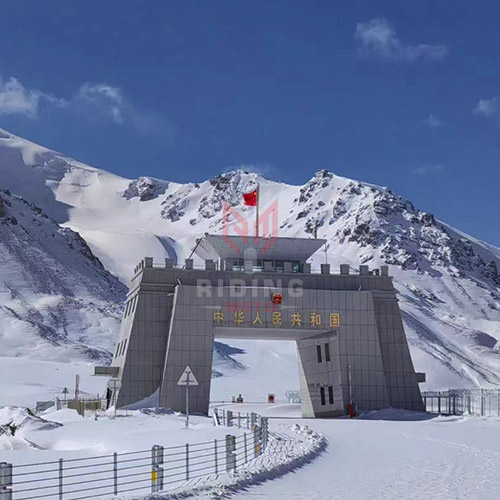
4. Khunjerab Pass (Pakistan-China Border)
Khunjerab Pass is the highest point on the Karakoram Highway, standing at over 4,700 meters (15,400 feet). The border crossing between Pakistan and China is a significant milestone on the journey. Prepare for cold temperatures and spectacular views of the surrounding mountains.
5. Sost Village
Located just below Khunjerab Pass, Sost is the last village before the border with China. This small town has a few basic hotels, and it serves as a rest stop for travelers heading toward China or returning from the past.
6. The Descent to Pakistan’s North
Having crossed Khunjerab Pass, the road follows a steep descent to Passu and to the lake, Attabad. The stunning turquoise waters of Attabad Lake are a must-see, and you’ll find boat rides across the lake to be a relaxing way to experience the beauty of the area.
The Languages and Traditions of the Local People
As you journey through the Karakoram Highway, you’ll encounter a variety of ethnic groups and languages. The area is inhabited by Pashtuns, Baltis, Hunzakuts, and Karakorams (all with their own dialects), traditions, and practices.
Languages Spoken
Although Urdu and English are widely spoken in the bigger towns and cities, local languages exist at every location on the Karakoram Highway. In Hunza, for example, you’ll hear Burushaski, a language spoken only in this region and believed to be one of the most unique languages in the world. In Gilgit, Shina is the main language, whereas Balti is spoken in the Baltistan region.
- Cultural Tip: Don’t hesitate to greet locals in their native language, such as “Assalam-o-Alaikum” in Urdu or “Buno yei” in Burushaski. Locals will appreciate the effort, even if you don’t speak the language fluently. It’s a way to show respect for their culture and start meaningful interactions.
Cultural Traditions
The cultures of the inhabitants on the Karakoram Highway are just as varied as in the countryside. Hospitality is one of the main values of the area, and people from the area are widely recognized for their hospitality and friendliness. Whether it’s offering you a cup of green tea or inviting you into their home to share a meal, you’ll find that the locals take great pride in hosting travelers.
- Cultural Tip: If invited into a local’s home, accept the invitation graciously. Eating with the natives is an excellent means of getting to know that peoples’ traditions way of life, and folklore. In many places, it is a tradition that includes eating and storytelling together. Don’t forget to try local dishes like Chapshuro (a meat pie from Hunza), Kahwa (a spiced tea), and Mantu (steamed dumplings from Baltistan).
The Beauty of Local Markets and Handicrafts
Along the Karakoram Highway, you’ll find vibrant local markets where artisans sell beautiful handcrafted goods, from intricate carpets and wooden carvings to jewelry and textiles. These markets show us the imagination and skill of those who live on the road.
- Shopping for Handicrafts: Hunza Valley is famous for the excellent quality of its woolen shawls and hand-woven carpets, whereas Gilgit is famous for its native Pashmina wool and Karakoram silk items. In Sost, a border town near China, you can find unique Chinese goods and local handicrafts.
- Cultural Performances and Events: It is not always that you have the privilege of seeing a traditional cultural activity or festival. Regions along the Karakoram Highway are known to celebrate local music dances and folklore festivities. Shandur Polo Festival is one such, situated in the Shandur Pass, Gilgit-Baltistan and Chitral compete for polo on one of the highest polo grounds in the world.
Spiritual and Religious Sites Along the Highway
The Karakoram Highway runs through areas imbued with high spiritual and religious importance. Not only are these sites of great value to their local inhabitants, but they also hold religious significance to the inhabitants who live there.
- Religious Diversity: The people along the Karakoram Highway practice Islam, primarily Shia Islam, though there is also a significant Ismaili population in Hunza. These religious communities have held traditions for millennia and along the way, you´ll see beautiful mosques and shrines. There are Buddhist vestiges in the Balti region of Baltistan in the form of very ancient Buddhist stupas and carved rock paintings carved into the countryside.
The End of the Road—But Not the End of the Motorcycle Adventure
While reaching the end of the Karakoram Highway marks the conclusion of this specific adventure, it doesn’t signify the end of your journey as a motorcyclist or traveler. Each of the rides provides an opportunity for new discoveries and there are many more routes to explore.
The experience you gain from this ride will enhance every future adventure, whether it’s exploring other remote locations, challenging yourself with new roads, or diving deeper into the cultures and landscapes around the world.
let’s not forget that the world is a place full of other difficult motorcycle tracks to face, just waiting to be tackled by those sufficiently daring to choose them. And know that the adventure is never truly over—it’s just the beginning of your next ride. Ride safe, ride far, and keep exploring! See Ya in the next adventure!
You can follow us on
Facebook | Twitter | Instagram | LinkedIn | Pinterest | YouTube
By: RidingMoto Rider