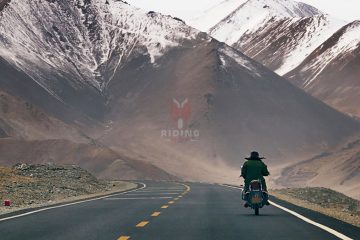
Hare, we talked about Alaska Dalton Highway. In our last blog, we have created a roadmap to raid Bolivia’s death road. While Bolivia’s Death Road holds the title of one of the most dangerous roads in the World, it’s far from being the only perilous route that tests the limits of motorcycle riders. A few thousand miles north, the Dalton Highway in Alaska presents another uniquely dangerous challenge for adventurers.
In a similar way, we explored Bolivia’s Death Road, with treacherous curves and steep cliffs; we” explored and submitted Alaska’s Dalton Highway. Dalton Highway is another dangerous road in North America that is famous for its hostile weather conditions, isolation, and capricious road surfaces. So, let’s gear up and explore one of the deadliest and coldest highways in the World.
As we imagine you’ll be riding all the 11 dangerous roads in the World, we’ve also provided a roadmap to travel from Bolivia to Alaska. We’ve provided two ways: one is by flying to Alaska from Bolivia and shipping your Motorcycle, and another one is by riding your Motorcycle by yourself and crossing almost 7-8 countries. The decision to choose the right way depends completely on you. So, let’s start with moving from Bolivia to Alaska to raid the Dalton highway.
Fly to Alaska and Ship Your Motorcycle
This one is the fastest way to reach Alaska from Bolivia. This will hardly take 15-25 hours, depending on the route you pick.
Step 1: Flying from Bolivia to Alaska
- Departure Airport: Begin your journey from El Alto International Airport in La Paz, Bolivia. It is the most convenient major airport if you’ve just ridden the Death Road.
- Layovers: Since direct flights to Alaska are not an option, layovers through major U.S. cities, such as Miami, Houston or Dallas, are the only option.
- Arrival Airport: The nearest major airport to reach Alaska’s Dalton highway is Fairbanks International Airport. Alternatively, you may also fly into Anchorage and then head north to Fairbanks by road or rail.
- Flight time: Depending on layovers, the journey will take about 15-25 hours.
What to expect:
- You are likely to have to travel on a combination of international and domestic flights.
- Expect delays from the process at the U.S. immigration/customs.
- Confirm the visa and other documents to enter Alaska, which is US ESTA.
You’ll probably reach Alaska or Fairbank airport in 24 hours, and then you will ship your Motorcycle to Alaska. If you don’t want to ship your Motorcycle, you can also rent one in Alaska.
Riding on Motorcycle from Bolivia to Alaska – Pure Adventure
A ride on the Motorcycle from Bolivia to Alaska is one Adventure one might dream of. It covers more than 15,000 miles across diverse lands and cultures of South, Central, and North America. Such a ride demands proper preparation, mental endurance, and an adventurous spirit. Let’s know how you can reach Alaska by Motorcycle. We’ve just mentioned an overview for a more detailed trip guide. You can utilize the RidingMoto application, which will provide you with a complete tour map.
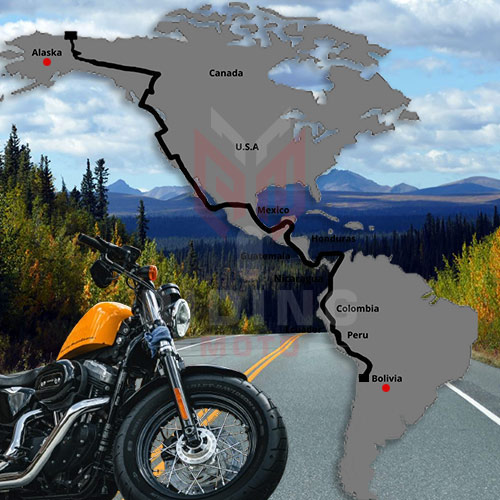
1. Route Overview
- Starting point: La Paz, Bolivia, after finishing Death Road.
- End Point: Deadhorse, Alaska, through Dalton Highway.
- Distance: Approximately 15,000 miles or 24,000 kilometres, depending on the route.
- Time Required: It takes 3 to 6 months for a well-paced ride with exploration along the route.
- Countries Crossed: Bolivia, Peru, Ecuador, Colombia, Panama, Costa Rica, Nicaragua, Honduras, El Salvador, Guatemala, Mexico, the United States, and Canada.
2. Recommended Route
Bolivia
- Road: North towards Peru off the highway from La Paz.
- Key Attractions
- Lake Titicaca: the highest navigable lake in the World.
- Uyuni Salt Flats: Take a little detour if you have time for it earlier.
- Challenges: Steep mountain roads with sharp turns and unpredictable weather.
Peru
- Route: Enter Peru through Desaguadero and head to Cusco and Lima.
- Key Attractions
- Machu Picchu: An unforgettable stop for history buffs.
- Nazca Lines: View these mysterious geoglyphs from above or from observation towers nearby.
- Challenges: Poor road surfaces, hills, and mountain passes. There is heavy traffic along coastal roads around Lima.
Ecuador
- Route: to northern Ecuador by way of Quito.
- Key Attractions
- Avenue of the Volcanoes: Scenic ride through volcanic landscapes.
- Amazon Basin: A stop-over for jungle lovers.
- Challenges: Altitude changes, and sometimes landslide blocks the road.
Colombia
- Route: Border crossing into Colombia, moving toward Medellín and Bogotá.
- Key Attractions
- Medellín: Called the “City of Eternal Spring.”
- Coffee Triangle: Stop and refuel on caffeine.
- Challenges: Curvy mountain roads with unpredictable weather. Some rural areas require extra caution.
The Darien Gap (between Colombia and Panama)
- Challenge: There is no single road that connects South and Central America.
- Solution: Transport motorcycle from Cartagena, Colombia, to Panama City, Panama.
- Air Freight: Expensive but faster at $1,000–$1,500.
- Sea Freight: Inexpensive but slower ($500–$1,000). Companies such as Stahlratte or Wild Card Sailing specialize in motorcyclists.
- Time: 1–2 weeks, depending on the method.
Central America
- Countries: Panama, Costa Rica, Nicaragua, Honduras, El Salvador, and Guatemala.
- Route: Travel the Pan-American Highway connecting all these countries.
- Key Attractions
- Arenal Volcano(Costa Rica).
- Colonial cities like Granada (Nicaragua) and Antigua (Guatemala).
Mexico
- Route: Enter into Mexico through Chiapas or some other southern border crossing entry. Then, travel north along the path to Pan America.
- Main Attractions
- Oaxaca: For its food, mainly.
- Baja Peninsula: Offers stunning coastal views and off-road riding opportunities.
United States
- Route: Cross into the United States through a major border station like Laredo or Tijuana. Drive north through California or Texas towards Canada.
- Key Attractions
- Pacific Coast Highway: A scenic route from California to Washington State.
- National Parks: Yosemite, Yellowstone and Glacier would merit diversions.
Canada
- Route: Enter Canada through British Columbia and take the Alaska Highway (Highway 97) east into Canada toward Alaska.
- Main Attractions
- Rocky Mountains: Scenic landscapes and animals.
- Yukon Territory: Remote, pure, and unforgettable.
Alaska
Now, you’ll be in Alaska to ride the Dalton highway.
- Route: From Fairbanks, Alaska, to the Dalton Highway and the beginning of the Dalton Highway. Drive 414 miles to Deadhorse up to the Arctic Ocean.
- Popular Attraction
- Arctic Circle Sign: Famous for the photographic shot.
- Wildlife: Bears, moose, and caribou roam free.
So it is how you can be on the Dalton Highway, Alaska. Apart from the route, you also need to prepare the documents and prepare them fundamentally to avoid unnecessary hassle.
- Motorcycle and Gear: To ride on the Dalton highway, prefer Adventure or dual-sport bikes, something like the BMW GS, Yamaha Super Ténéré, or Suzuki V-Strom.
- Gear Checklist:
- Protective apparel of strength for different climates.
- Knobby tyres for off-road portions.
- Extra fuel cans for remote stretches.
- Tools, tyre repair kit, spare parts: chain, spark plugs, filters.
Documentation
- Visas for each country and all import/export permits for your bike.
- Purchase motorcycle insurance valid for every country you’ll pass through.
- International Driver’s Permit
3.Expectations of Challenges
- Border Crossings: Be prepared for long waits, thorough inspections, and varying fees. Keep multiple copies of all paperwork.
- Weather: From tropical heat in Central America to sub-zero temperatures in Alaska, be prepared for all climates.
- Road Conditions: Gravel, potholes and mud in South and Central America; icy roads in Alaska and northern Canada.
- Isolation: Some stretches, such as the Dalton Highway, have no services for miles and miles.
4. Keys to Success
- Plan Your Seasons: Start in Bolivia during the dry season, May–October. Pass through Alaska late in the summer or early fall to avoid extreme cold.
- Be Flexible: There are detours and delays in the Adventure. Enjoy the uncertainty.
- Stay Connected: Carry a satellite phone or GPS tracker or use an application like RidingMoto for emergencies in remote areas.
- Camping Tents: Carry a tent with you to get the max out of your Adventure.
Riding between Bolivia and Alaska is a fun as well as challenging journey, and you’ve to be prepared for many uncertainties, but during the ride, you will also experience some of the best scenery, nature’s wonders, etc. Now, let’s start our main blog in detail.
Dalton Highway: A Route of Legendary Challenge
Alaska’s Dalton Highway, or Alaska Route 11, is notched as one of North America’s most infamous and remote roads. The Dalton highway stretches 414 miles from central Alaska’s Fairbanks to Deadhorse, near the Arctic Ocean, and has attained a reputation as a true test of endurance for the motorcyclist, adventurer, and trucker alike. It is more aptly called “the loneliest road in America” since a Dalton traverse covers the toughest and most desolate lands conceivable. Riders pass through everything from unpredictable weather conditions to gravel roads to continued threats of wildlife crossing across the pathways. Even with this, this road gives some of the greatest excitements any motorbike riding person will ever get—be it raw beauty combined with the thrill of an Alaska road or only pure delight of the less travelled road.
The Dalton is more than a road; it’s a journey that pushes riders to their physical and mental limits. From driving winds to sudden snowstorms, this is an adventure that can alter a rider’s life. But for those who take on the challenge, the Dalton offers a sense of accomplishment that’s unmatchable.
Why Ride the Dalton Highway?
You may ask why on Earth anyone would want to ride the Dalton Highway. The highway has a rather notorious reputation for treacherous conditions, minimal services, and unpredictable weather; however, precisely because of all that, that’s what appeals to the seasoned adventure rider. And here’s exactly why riding the Dalton Highway is a dream come true for many.
- Challenge: The Dalton Highway is an experience that will put your skills to the test in every area. Gravel roads and fighting strong winds and freezing temperatures test your entire riding ability in preparation and resilience.
- Scenic Beauty: It is a state that boasts the most awe-inspiring views, and Dalton Highway is no exception. Open glimpses of wilderness, Arctic tundra, and mountain ranges tower over riders. Nature lovers and photographers may want to take advantage of these one-time views.
- Isolation and Freedom: Dalton Highway provides a sense of isolation that makes it hard to get any other route. With very few towns over a thousand kilometres on the journey, you can enjoy silence and freedom away from the modern World.
- The achievement: Crossing the Dalton Highway is an achievement that no rider can forget. The Dalton Highway is a test of both endurance and bravery, and one will surely feel proud of completing this entire distance.
- Adventure: Beyond the physical challenges, Dalton Highway is a route full of Adventure and natural beauty. Every twist and turn on Dalton Highway brings new surprises, and whether it’s changing weather or the unexpected wildlife being sighted, it pays for itself.
For many riders, it’s not just about the destination—it’s about the journey. And on the Dalton Highway, that journey is as demanding as it is rewarding.
Overview of the Journey
Dalton Highway runs from Fairbanks, Alaska, to the small town of Deadhorse, a small town on the shore of the Arctic Ocean for about 414 miles. The route is usually divided into two major stretches, one of which is a 175-mile stretch from Fairbanks up to Coldfoot and another stretching of 239 miles that reaches from Coldfoot to Deadhorse. By combining both apr, you’ll experience one of the most challenging routes in the World.
- Fairbanks to Coldfoot: The first 175 miles of the Dalton Highway are paved, making for a pretty smooth ride at the start of the journey. However, this section can be nasty with the variable weather – rain and snow. As riders get closer to Coldfoot, the road breaks up into gravel, and it becomes much rougher from there. There are not a lot of services along the route, so fuel and food become something to plan for.
- Coldfoot to Deadhorse: The second Dalton section is of a completely different type of experience. The second part of the Dalton highway stretches 239 miles. Most of the road is fully gravel, and unpaved tracks are often muddy. During this section, the riders will see no service centre, food court or petrol pump. Riders need to preplan their fuel planning, food requirements, and basic essential backup stock. The road could be very dangerous, especially if it is winter or wet, so riders have to be prepared for any scenario.
During the whole ride, riders will face some of the most extreme weather conditions in the world-from snowstorms to freezing winds. There is no provision for services, so the riders have to carry extra fuel, spare parts, and emergency supplies. Dalton Highway offers an extreme test of skills and Adventure into one of the remotest places on Earth for those willing to take on the challenge.
In the following chapters, we will be going into greater detail about the preparation for the Dalton Highway and what you can expect of the road ahead. We’ll break down the sections so you can take them on safely and with confidence.
Chapter 1: Preparing for the Ride
Riding the Dalton Highway is beyond technical motorcycle skills. It will require physical fitness and mental robustness since that is how this ride is most likely going to knock your system, both physically and mentally. Prepare yourselves for what you are facing next.
Physical Preparation
- Stamina: The ride goes for about 400 miles, and that is no single short burst that can easily do the job. It just isn’t easy to go out in such long stretches of riding on gravel roads with challenging weather. One has to make stamina preparations. Some workouts like cycling, hiking, and endurance running help the cardiovascular system and increase one’s leg and core strength, both of which can be beneficial for controlling the bicycle over uneven terrain.
- Strength: Long-distance riding on extremely hilly terrain demands not just mental strength to concentrate but also considerable muscular endurance. Building a strong core and upper body develops balance and control. Weight training, yoga, or Pilates must be considered in terms of increasing flexibility and posture along with maintaining the endurance required for long rides.
- Flexibility: This is a very important part of dealing with the physical strain of long days on the bike. Keep your muscles loose by stretching regularly and not being stiff, especially in your lower back, arms, and legs. Yoga can also help loosen up flexibility while relieving stress-something that is especially important when you’re out in the middle of nowhere with no immediate help.
Mental Preparation:
- Mindset: The ride on the Dalton Highway is more of mental preparedness than physical. At times, it is frightening, with miles of unpaved roads and unpredictable weather. To handle that, one has to be calm and focused. A positive attitude, patience, and preparation for tough situations will guarantee the completion of this trip.
- Preparation for stress: You might face so many unexpected problems, like a blowout tyre, bad weather, or exhaustion. You have to prepare your mind to handle stress, loneliness, and physical pain.
- Endurance: It can get quite tiring on the head while taking long distances. One must get used to riding hours on a bike prior to the ride. Get a few hours on a single ride to build up the mental and physical endurance of the ride.
Selecting the Right Motorcycle for Dalton Highway
Choosing the right Motorcycle will ensure your security and comfort when riding on the Dalton Highway. The road is definitely very unpredictable and very raw, so every bike is not made to endure what this highway puts them through. Factors to be considered are as follows in selecting the right bike:
- Adventure Touring or Dual-Sport Motorcycles: These are motorcycles tough enough to carry themselves to traverse both paved and off-road. These motorcycles provide both comfort and durability. Also, with the longer suspension travel and rugged tyres, these motorcycles are capable of absorbing gravel, among others. You can pick motorcycles like BMW GS series, Yamaha Super Ténéré and Suzuki V-Strom.
- Weight: Lighter bikes make it much easier to control while riding on gravel roads through tricky sections. However, extremely light bikes may not perform well in extreme weather and when loaded. Choose a Motorcycle that is manageable enough for long routes and should be comfortable for you.
- Tyre Choice: Tyre choice can make or break your experience of Dalton Highway. A good choice is a mix of knobby tyres for off-road handling and cold-weather tyres. Your tyres must have enough tread to go over the loose gravel and soft dirt portions of the highway and still offer good grip on any paved stretches.
- Fuel Range: There are few refuelling stations along the Dalton Highway. You can travel for 250 miles without having to stop for fuel. Your Motorcycle should have enough fuel so that you will not have a problem if you cannot find the next fueling stop or carry spare fuel in a safe canister.
- Comfort: Dalton Highway is long, and comfort will have much to do with the success and enjoyability of your ride. Make sure you get a motorcycle with an adjustable seat, good ergonomics, and proper wind protection. The comfort will be there in the ride to tackle the difficulties that come your way, hence minimizing fatigue over long hours.
Necessities and Equipment in the Ride
The Dalton Highway’s unpredictable conditions and harsh environment require a well-equipped rider. Below are the essential gear and equipment you’ll need for this journey:
Protective Clothing
Safety should always be your number one priority, and riding the Dalton Highway requires high-quality protective clothing designed for extreme conditions. Here’s what you’ll need:
- Helmet: DOT-approved full-face helmets are required to protect against debris and various types of accident opportunities. Choose a helmet that fits well, is lightweight, and provides proper ventilation to keep comfort in all weather conditions.
- Jacket and Pants: Purchase motorcycle-specific gear, whether it is weather-resistant or protective. Jackets and pants should have armour built to absorb impacts; they must be made from heavy-duty materials, leather or textile, and waterproof or water-resistant in case it’s rainy or snowy.
- Gloves: Gloves are a must if you want to retain grip and control in cold or wet weather. They should be well-insulated, waterproof, and have a good grip on the handlebars. Also, gloves with touchscreen compatibility will enable you to check your GPS or mobile without removing your gloves.
- Boots: Any adventure ride requires good, sturdy, waterproof boots with ankle protection. They should support your legs, guard against falls, and keep your feet dry and warm in wet conditions.
- Base layers: Use moisture-wicking base layers to keep sweat off the skin in warm weather and insulate during colder weather. You know Dalton’s weather can change in just hours, so having layers to add and remove will have you dressed for comfort.
Motorcycle Maintenance and Spare Parts
The Dalton Highway is a pretty lonely road, and a mechanical breakdown can lead to big delays or worse. The more tools and spare parts you bring with you, the less likely you will be sidelined:
- Tool Kit: Add in a basic tool kit consisting of wrenches, screwdrivers, pliers and tyre levers. See that it has those that would have especially applied to your type of bike, like adjusting/repairing tools for a tyre or a chain.
- Tyre Repair Kit: Flat tyres were probably the most frequent issue on the Dalton Highway, particularly on the gravelly portions. You must have puncture plugs, tyre sealant and a portable pump or CO2 inflator. It’s great to have a basic idea of using such a kit and even learn basic things for repair.\
- Spare Parts: Carry a few key spare parts like spark plugs, a fuel filter, a chain or chain link, and any bike-specific components that could fail along the way. If you’re unsure about what parts to bring, ask a mechanic for advice based on your bike’s make and model.
- Oil and Fluids: Ensure that the bike is topped off with oil and fluids before leaving. It is possible to carry extra oil, brake fluid, and coolant along to top up on the way. Prepare for Extreme Weather Conditions
Prepare for extreme weather and conditions.
Weather on Dalton Highway can change within minutes, with clear, bright skies turning into snowstorms or vice versa. So, extreme changes in temperature could occur many times. You should prepare for any type of climate:
- Cold weather gear: Temperatures will drop around, even in summer, to freezing, especially near the Arctic Circles. Use heated grips and a vest that’s heated in addition to the other gear; it will really help you in freezing weather.
- Rain Gear: Rain can fall from almost anywhere at any time, so come prepared for rain. Come with complete body rain suits that also keep your Motorcycle dry.
- Sun Protection: During summer in Alaska, heat is more of a beat, like rain. The extended days and hot sun in Alaska cause a lot of damage to the eyes and the skin because of increased UV light.
- Wind Protection: The Dalton Highway is very windy. A windproof jacket, sealed gloves, and boots can help reduce the effect of wind chill and keep you warm and comfortable.
- Wildlife on the Road: The Dalton Highway cuts through sweeping, natural landscapes and with that comes the presence of wildlife. One can see moose and caribous bears and even some musk oxen making their way across the wide stretch of the highway, with an occasional and sometimes frightening appearance out of nowhere in the centre of the road.
- Loneliness: The roads are empty, so you might travel the whole time without seeing another automobile. This can be mentally draining to some, especially on worse days. Keep your focus on the trip and keep your well-being mentally intact.
Understanding these key challenges of the Dalton Highway is important to anyone in preparation to ride this legendary and dangerous road. Weather, wildlife, and road hazards will test your skills and your endurance, but with preparation and vigilance, you can conquer this legendary highway to Deadhorse, an adventure you will never forget.
Chapter 3: Breaking Down the Sections of the Dalton Highway
It’s known that Dalton Highway is a legendary ride divided into two sections: Fairbanks to Coldfoot and Coldfoot to Deadhorse. There is no comparison between these sections of the highway, as every section comes with unique challenges and rewards. Knowing what to expect along each stretch of this highway, either while attempting the first 175 miles or getting ready to push the final distance to Deadhorse, is essential in planning and navigating Dalton Highway.
Fairbanks to Coldfoot: 175 miles
Road Conditions and Challenges
The first part of the Dalton Highway is from Fairbanks to Coldfoot. It covers 175 miles and leads into the vast, remote Alaskan wilderness. It is said that the southern end of the highway is relatively easier than the northern end but still presents many challenges.
- Paved and Gravel Roads: The road is paved at the beginning but soon changes to gravel when you pass by Fairbanks. The paved parts do bring some relief, but once you continue on, expect some of the worst gravel parts, loose dirt, and the occasional washboard roads.
- Gravel Hazards: Gravel demands smooth throttle control and a clear, composed mind. Gravel is slippery when wet or loose and can make the washboard surfaces shake your bike and your confidence. It is also subject to uneven surfaces with potholes or rocks that can influence the handling of the vehicle.
- Variable Terrain: You will pass through forests, low-lying tundra, and river valleys. Variable terrain can change at a moment’s notice; that is particularly true when driving during winter months. Keep an eye out for a change in road conditions since you are driving at a slow pace and in both gravel and uncertain road conditions.
Fuel Stops and Resting Places
There are very few fuel stops and rest areas along this section of the highway, and services are pretty minimal, so plan ahead.
- Gas: Your first gas stop will be at Pioneer Park in Fairbanks. Fill up there before continuing to drive. The Yukon River Bridge should give you a gas stop 80 miles into the drive. Coldfoot will then be the next major place to refuel. Top your gas at these stops so that you don’t run out of fuel when going to the next stop.
- Rest Stops: There are a series of pull-outs along the route to pull over and stop, stretch a little and enjoy some of the breathtaking views. Pay attention to well-signposted rest stops where you can pull over. However, amenities are very basic, so do not expect much beyond a parking spot for your bike and somewhere to quickly sit back.
- Coldfoot: This is the first real stopping place on the Dalton. A good stop will be offered there for a gas station, small diner, motel, and supplies. That would be another great stop as well if continuing toward Deadhorse. If you desire to supply or find some cover from bad weather, stop in Coldfoot.
Key points to look out for:
- Yukon River Bridge: Under this bridge, you cross over the Yukon River on this iconic structure, perhaps one of the first sizeable things you see after leaving town on the Dalton Highway. It is an imposing-looking structure with a great view, a sort of milepost feeling as you drive into the wild north.
- Finger Mountain: The site is approximately 100 miles north of Fairbanks and is one of the favourites due to its unique formation of rock and the splendid view encircling its valleys. This is yet another fine photo opportunity indicative of the vast sweep of the Alaskan wilderness.
- The Arctic Circle: About 130 miles north of Fairbanks is the Arctic Circle; that is where you are now entering the Arctic region. It is a big landmark for the traveller and an excellent photographic opportunity since you have just entered the land of extremes.
Coldfoot to Deadhorse: 239 miles
The real challenge begins on the Dalton Highway from Coldfoot all the way to Deadhorse, which is much more inaccessible, rugged, and demanding and requires much time and endurance.
- Gravel Roads: The section immediately after Coldfoot is the next long way on gravel roads, which may be loose and very difficult in some parts. The road surface will vary between smooth, compact gravels to deep, rutted ones, and it would really be difficult to maintain both your speed and control here.
- Rough Terrain: The further you go to the circle from the Arctic Circle, the worse the road gets. You will drive through mountain passes, muddy stretches, and slippery gravel surfaces. When it pitches up, you also find the gravel surface much harder, demanding slower speed and more careful handling.
- Washboard Sections: Most riders experience this on some sections of the Dalton, as the gravel will cut grooves that make it feel bumpy and unstable. Here, the trick is to maintain a constant speed and grip. Ride on higher gears in these sections to have better control over the bike without shaking too much.
The Long Stretch with No Services
One of the most daunting stretches on the Coldfoot to Deadhorse route is the lack of services. For close to 240 miles, there are no fuel stations, food stops, or other amenities, so it does require planning ahead.
- Fueling: Fuel cannot be located between Coldfoot and Deadhorse; therefore, it is very important to fill up the tank before leaving Coldfoot. If you are travelling in a group, take extra fuel in case of an emergency. Plan your fuel and pay attention to your fuel gauge during this long, remote stretch.
- Few rest areas: As compared to the one from Fairbanks to Coldfoot, this section has fewer rest stops. Prepare yourself for covering miles before you get a rest stop and have enough water and snacks in your bag with you as you take every little chance that is provided to get off the machine and rejuvenate.
- Communication: There is very little cellular coverage along this corridor, so be sure to carry a sat phone or GPS device that can provide contact information in case of failure due to mechanical or injury, etc.
The final push to Deadhorse.
The last 100 miles from Coldfoot to Deadhorse are probably more of a mentally straining and physically demanding segment, considering the isolated country, changing weather, and fewer amenities around you.
- Isolation and Endurance: With few vehicles on the road, the sense of isolation can feel overwhelming. You’ll be riding through desolate landscapes, with stretches of road that seem to go on forever. The lack of human activity can be mentally exhausting, so stay focused and take breaks when necessary.
- Weather: As you reach Deadhorse, the temperature drops significantly. When it comes to wintertime, this place is going to get colder. This means that while riding here, there could be snow or ice, so always get ready for changing weather.
- The Finish Line: Now, finally, you step into Deadhorse, and you’ll be at the northernmost point of entry, on the Dalton Highway. The feeling of accomplishment will be immense, but be sure to take in the Arctic beauty, knowing that the journey you’ve just completed is no small feat.
The Dalton Highway, with its rugged terrain, extreme weather, and isolation, is not a journey to be taken lightly. Divided into two sections—Fairbanks to Coldfoot and Coldfoot to Deadhorse—each offers distinct challenges that test both your riding skills and your endurance. With proper preparation, planning, and a steady mindset, you’ll be ready to conquer the Dalton and experience one of the most memorable rides in the World.
Ensure that you keep alert, pay heed to the road, and have the beautiful Alaskan wilderness for the ride while you drive on this fabled highway.
Voila, you’re at a dead horse, and we’re at the end of the blog; we’ll catch you in our next part of the blog; till then, grind hard, ride the bar and be free.
You can follow us on
Facebook | Twitter | Instagram | LinkedIn | Pinterest | YouTube
By: RidingMoto Rider